How to Structure a Simple MMA Training Week as a Hobbyist
Jul 31, 2026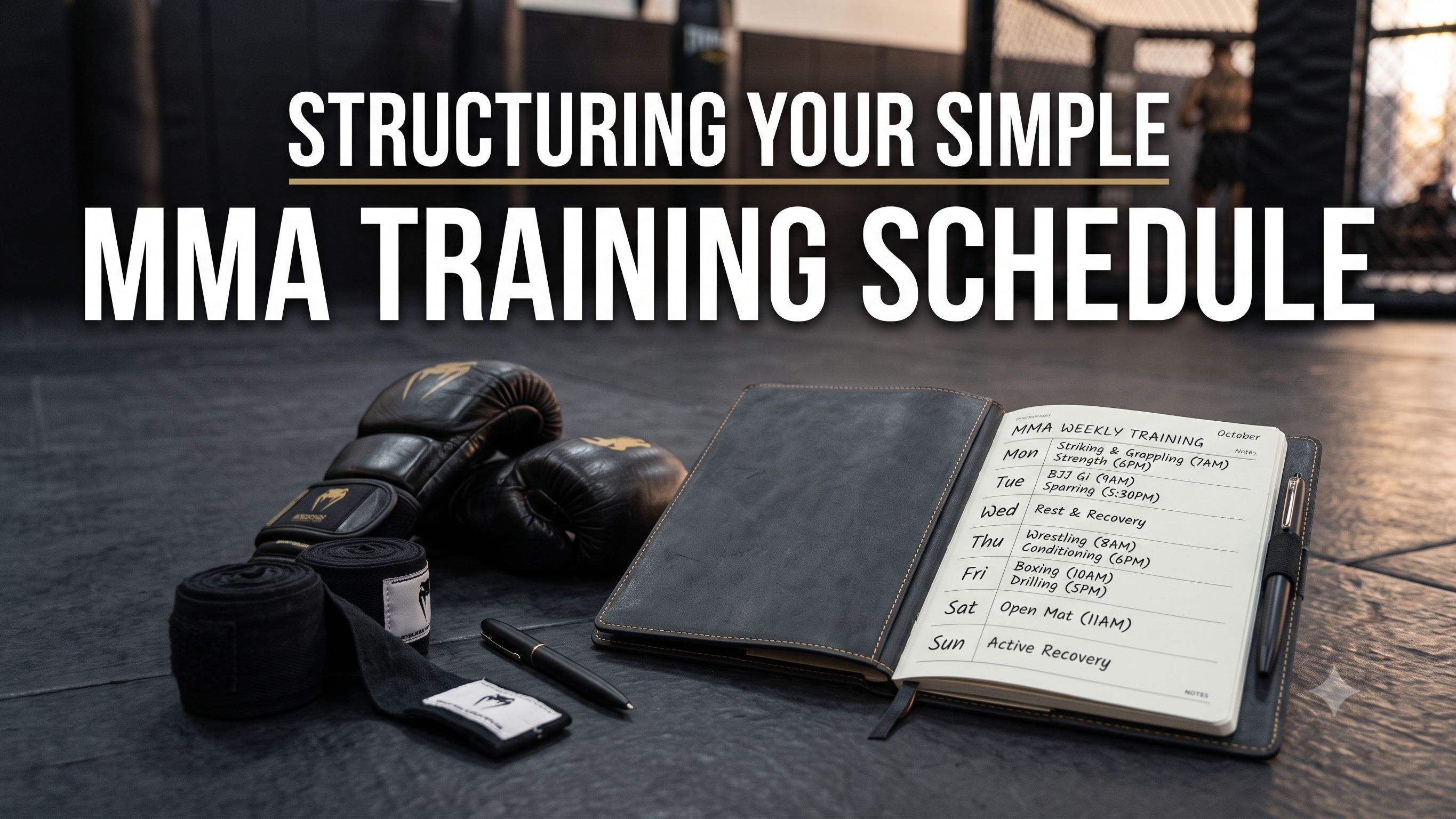
How to Structure a Simple MMA Training Week as a Hobbyist
If you train MMA as a hobbyist, it can be hard to know how much to do each week. You want to improve your striking, grappling, conditioning, and overall fight IQ, but you also have work, family, and recovery to manage.
A simple MMA training week should help you build skill consistently without leaving you exhausted. The goal is not to train as much as possible. The goal is to train enough, recover well, and keep improving.
Start With Your Real Schedule
Before choosing drills or workouts, look at how many days you can realistically train.
For most beginners, hobbyists, and amateur fighters with a normal schedule, 3 to 5 training days per week is plenty.
A good weekly structure should include:
- Striking practice
- Grappling or wrestling practice
- MMA-specific skill work
- Strength and conditioning
- Mobility and recovery
- At least one full rest day
If you only have 3 days per week, focus on skill first. If you have 4 or 5 days, add strength and conditioning carefully.
A Simple 3-Day MMA Training Week
A 3-day plan works well for busy hobbyists or beginners building consistency.
Day 1: Striking and conditioning Focus on stance, footwork, basic punches, kicks, defense, and light conditioning. Keep the conditioning short and controlled. You should finish tired, not destroyed.
Day 2: Grappling and MMA basics Work on wrestling entries, takedown defense, positional control, escapes, and ground-and-pound awareness. Keep the focus on understanding positions, not just winning rounds.
Day 3: Mixed skill session Combine striking into takedowns, cage or wall work, clinch basics, and controlled sparring drills. This day helps connect the separate parts of MMA.
This structure gives you exposure to the main areas of MMA without overloading your body.
A Simple 4-Day MMA Training Week
A 4-day plan gives you more room to improve while still allowing recovery.
Day 1: Striking technique Work on stance, footwork, jab, cross, low kick, basic defense, and combinations.
Day 2: Grappling or wrestling Focus on takedowns, takedown defense, top control, guard passing, escapes, and submissions.
Day 3: Strength and conditioning Use simple strength work: squats, hinges, pushes, pulls, carries, and core training. Add short conditioning, such as intervals, circuits, or bag work.
Day 4: MMA integration Practice combining skills. Examples include jab to level change, kick to clinch, wall work, ground-and-pound positioning, and controlled live rounds.
This is a strong weekly setup for most hobbyists because it balances skill, fitness, and recovery.
A Simple 5-Day MMA Training Week
A 5-day plan is better suited for experienced hobbyists or amateur fighters preparing for competition.
Day 1: Striking technique Day 2: Grappling or wrestling Day 3: Strength and conditioning Day 4: MMA-specific drilling Day 5: Sparring or live training
The key is controlling intensity. Not every session should be hard. If every day turns into a fight, your technique will suffer and your risk of injury will go up.
Use harder sessions for sparring, wrestling rounds, or conditioning. Use lighter sessions for drilling, technical work, mobility, and recovery.
Do Not Skip Recovery
Recovery is part of training. If you are sore, tired, and unfocused every session, you are not adapting well.
At minimum, include:
- One full rest day each week
- 7 to 9 hours of sleep when possible
- Easy mobility work
- Light walks or low-intensity movement
- Enough food and water to support training
For hobbyists, the best training plan is one you can repeat for months, not one that burns you out in two weeks.
Keep Sparring Controlled
Sparring can be useful, but it should not be the center of every week, especially for beginners.
Use sparring to practice timing, distance, defense, and decision-making. Keep most rounds technical and controlled.
Good sparring should help you learn. It should not leave you injured, frustrated, or unable to train the next day.
If you are new, spend more time on drilling and positional work before increasing live rounds.
Track One or Two Goals Each Week
A simple way to improve faster is to choose one or two focus points each week.
Examples:
- Keep your stance after every combination
- Exit after throwing the cross
- Defend the takedown with better hip position
- Stand up safely from bottom position
- Control breathing during conditioning
Small goals make training more focused. They also make progress easier to notice.
Conclusion
A good MMA training week does not need to be complicated. Start with a realistic schedule, train the main skills consistently, manage intensity, and recover well.
For most hobbyists, 3 to 4 focused sessions per week is enough to build a strong base. Add more only when your body, schedule, and recovery can handle it.
The best plan is the one you can follow consistently while still improving.